
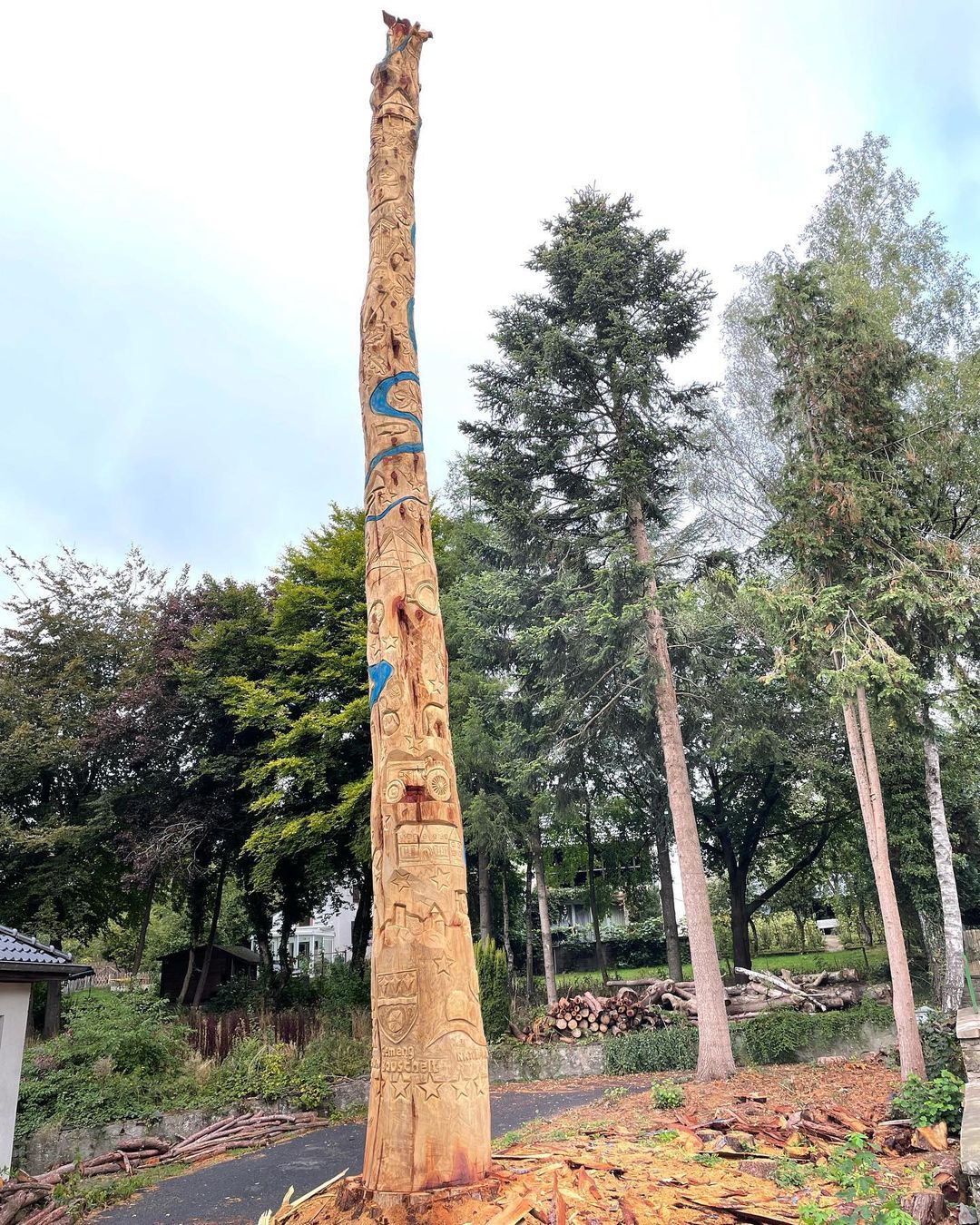
Boulaide is both a commune and a village in the north-west of Luxembourg, set on a plateau above the Sûre valley at an altitude of around 460 meters. From here lies the westernmost point of the country, while a direct bus line (903) connects Boulaide with the heart of Luxembourg, linking rural life with the wider region.
Cultural landmarks are woven into everyday life. Among them are the kiosk, the organ of the Sacré-Cœur church, the sycamore tree, the Sirer Millen, the mill canal, and the Haff. Built between 1926 and 1927, the Sacré-Cœur church stands out with its neo-Romanesque architecture, altarpiece, stained-glass windows, and organ. For generations, the church, the school, and the town hall formed the three pillars of community life. Today, the town hall occupies the former school building, preserving this continuity in a new form.
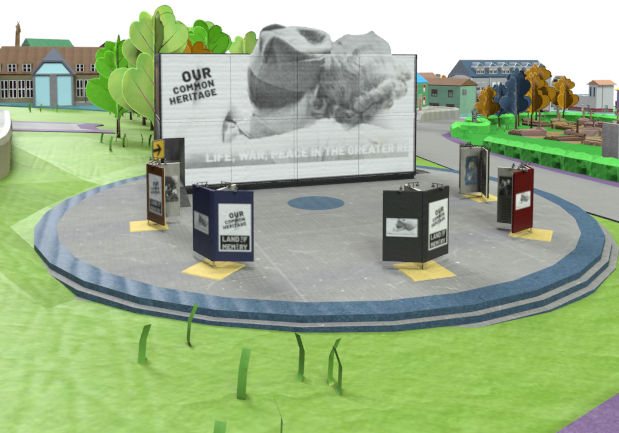
Boulaide is also known for its landscapes, marked by hiking paths and viewpoints that open onto the surrounding countryside. The village hosts the exhibition “Our Common Heritage”, a cross-border project that brings shared experiences into focus. Outdoor enthusiasts can explore routes such as the MTB Bavigne–Boulaide trail, the Éislek Pad Boulaide, and the Boulaide auto-pedestrian trail.
Memories, music, and artistic expression
The Second World War left lasting traces in Boulaide. For a short period, General Patton established his command centre at the Hotel Hames in Baschleiden. In 1976, a monument was erected in honour of the 35th Infantry Division, which liberated the town. Another memorial sign, unveiled on September 26, 2009, commemorates the 1944 crash of the plane known as “Bouncing Betty.”
Boulaide’s cultural life continues to evolve. In 2022, four friends known as Grandpa Charlie missed the last bus and created a spontaneous song that became a viral sensation titled “BOULAIDE!”, with a music video filmed across the village.
Art also plays a visible role. Boulaide is part of the European Route of Freedom, a project conceived by the painter and sculptor Otto Freundlich. In the village, this initiative is represented by the wooden sculptures “Anges de la Paix”, created by Luxembourgish artist Marie-Josée Kerschen.
Les Bus Frisch
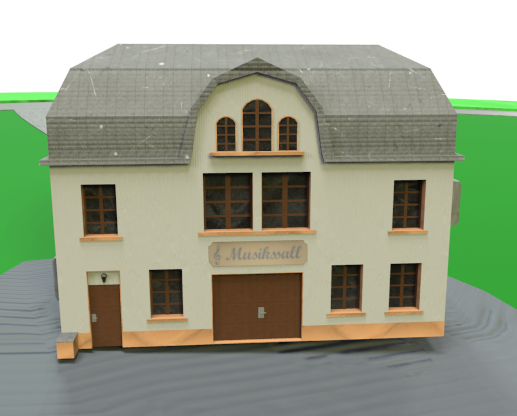
The story of Les Bus Frisch begins in 1927, when Joseph Frisch founded the company in Saeul under the name Emile Frisch. His sons Emile, Henri, and François later established Voyages Frisch Frères in Boulaide. In 1947, the brothers went separate ways: Emile founded Autocars Emile Frisch in Luxembourg City with nine vehicles, while François and Henri left the bus business.
After Emile Frisch’s death in 1962, the company was led by his wife Hélène Frisch-Schmit and his nephew Emile Frisch. In 1999, management passed to Guy and Jean-Claude Frisch, representing the fourth generation of the family.
From early routes such as Boulaide–Luxembourg and Boulaide–Wiltz–Rambrouch, the company expanded steadily. In 1954, offices and workshops moved to Bonnevoie, and the fleet continued to modernize. A milestone came in 1976 with the introduction of Luxembourg’s first luxury coach, equipped with air conditioning and a drinks bar. By the early 2000s, the fleet had grown significantly, and in 2009 a partnership with Autocars Pletschette led to shared premises in Bettembourg. Today, Autocars Emile Frisch offers services ranging from rentals and excursions to city tours and corporate events.
Vie Sociale
Boulaide’s town hall reflects both loss and renewal. On December 26, 1944, a Nazi grenade caused an ammunition depot explosion that destroyed the old boys’ school and the municipal archives. The construction of a new school in 1993 allowed the administrative functions to expand. In 2018, the former boys’ classroom was transformed into a multipurpose room for weddings and council meetings. The full renovation was completed in October 2022, with an inauguration attended by national representatives. Today, the building serves as a central point for residents and visitors seeking information about Boulaide and the region.
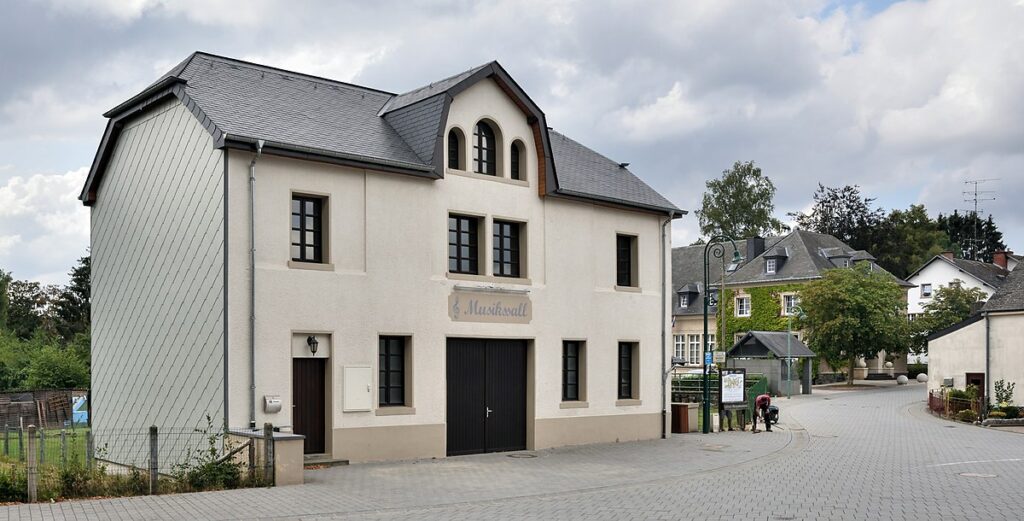
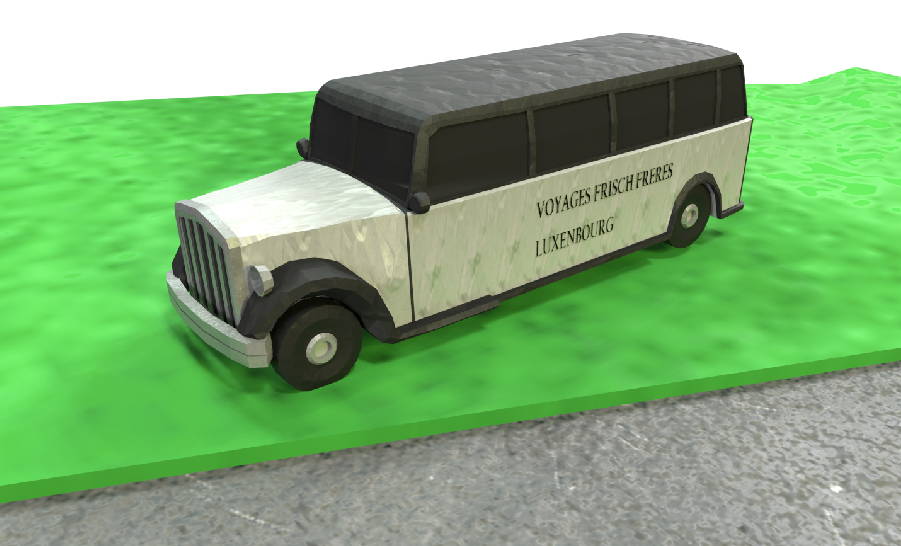
Music has long been part of social life. The Fanfare Boulaide, founded in 1939, endured the disruption of the Second World War and celebrated its rebirth in 1947 with its first flag. Anniversaries and concerts have strengthened its place in the community. The music pavilion, originally from Niederwiltz and rebuilt in Boulaide in 1949, remains a focal point for gatherings. The former Molkerei building, converted into a music hall in 1993, continues this tradition.
Education, safety, and agriculture also shaped the village. A new school opened in 1949 and underwent modernization from 2004 onward. The volunteer fire department, founded around the turn of the 20th century, entered a new chapter with the inauguration of the CGDIS building in 2017. The Molkerei itself recalls Boulaide’s agricultural roots, once supplying milk for the national butter brand “Rose.”
Hôtel Hames
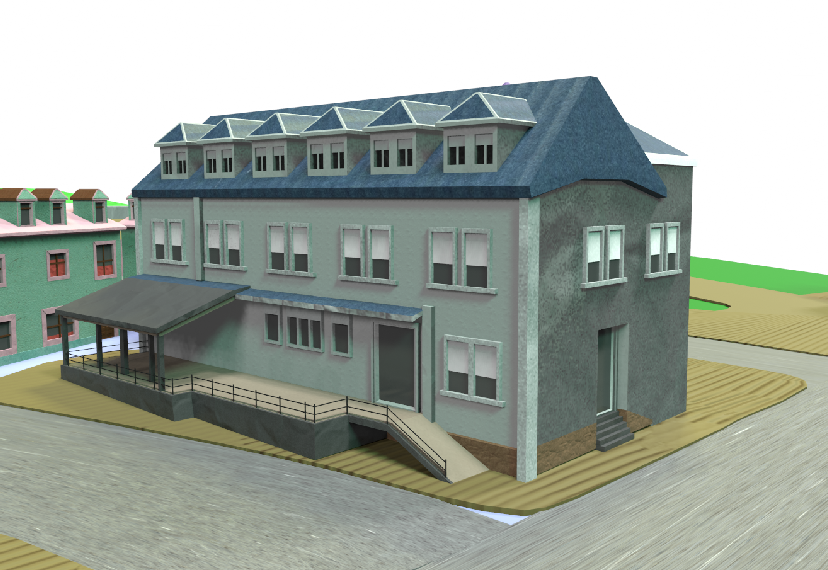
For many years, the Hôtel Hames stood as a well-known establishment in Boulaide, run by the Hames family and remembered for its welcoming atmosphere. References date back to 1903, with images from 1916, and its traditional Luxembourgish architecture matched the style of its time.
During World War II, the hotel served as a temporary command centre for General Dwight D. Eisenhower, who moved between several posts in the region. Beyond its military role, the hotel functioned as a social hub, offering accommodation and local cuisine. It also housed the Frisch family’s bus garage until the building was eventually demolished.
Albert Hames, born next door to the hotel in 1898, became an engineer known for innovative mining designs in southern Luxembourg. Catherine Hames, who managed the hotel in the 1920s, made history as the first woman in the country to obtain a driver’s license.
Bouncing Betty
“Bouncing Betty” was a B-17 Flying Fortress of the 303rd Bomb Group, 358th Bomb Squadron. On September 28, 1944, while en route to Magdeburg, the aircraft was attacked by enemy fighters, losing engines and forcing the crew to crash-land near Boulaide. The B-17’s robust construction played a role in the survival of the crew, eight of whom later returned to service.
Today, a memorial near the city hall and Sacred Heart Church marks the site of the crash. Each year at the end of September, the association “Frënn vun der Bouncing Betty” organizes a reunion to commemorate the event. The name itself echoes a German mine of the same nickname, though the reason for its use on the aircraft remains unclear.
Jérôme de Busleyden
Jérôme de Busleyden, born in 1470, came from an old Luxembourgish family rooted in Boulaide, though his exact birthplace is debated. He was closely connected to leading humanists such as Erasmus of Rotterdam and Thomas More and lived under the regency of Archduchess Margaret of Austria.
A scholar and patron, Busleyden studied in Louvain, Orléans, and Padua. In 1517, he founded the Collegium Trilingue at the University of Leuven, an institution dedicated to the study of three classical languages that influenced humanist education across Europe.
His career also included diplomatic and ecclesiastical roles, from councillor at the Great Council of the Netherlands to chancellor under Archduke Charles. His legacy lives on in Boulaide, where a street bears his name, linking the village to a broader intellectual history that reached far beyond its borders.
Viewed as a whole, Boulaide emerges as a place shaped by continuity rather than isolated moments. Its plateau setting, cultural monuments, wartime memories, artistic expressions, and everyday spaces form a shared narrative rooted in the village itself. Together, these elements give Boulaide a clear sense of identity, where local life and historical experience remain closely connected.