
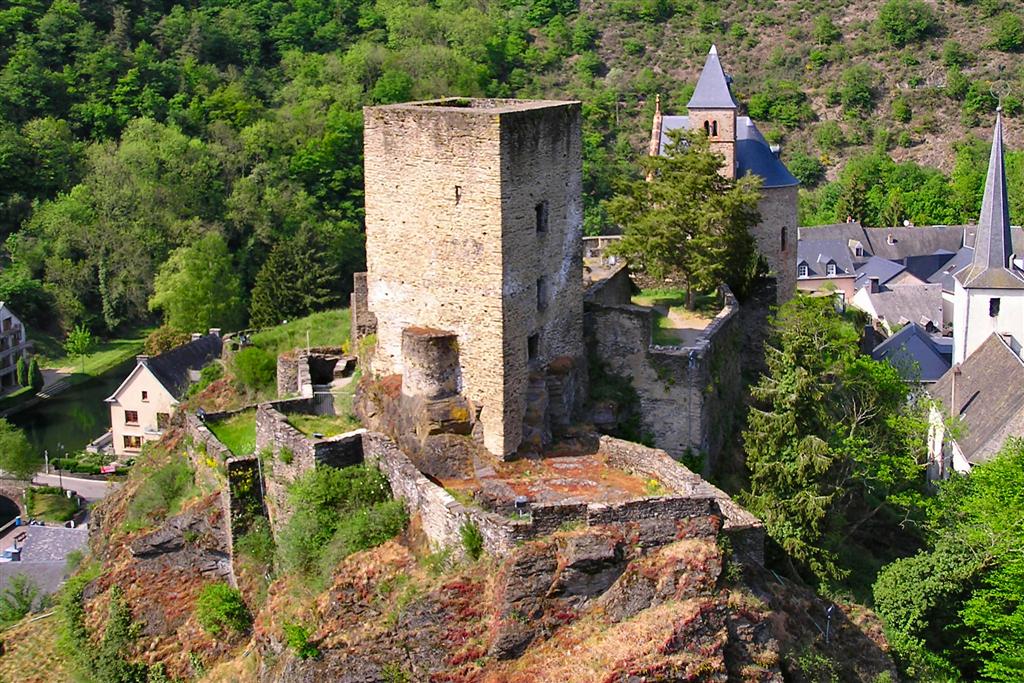
Le Château d’Esch-sur-Sûre developed gradually over time, reflecting the long history of the village itself. The first written mention of both the castle and Esch-sur-Sûre dates back to 774. Significant expansion took place under the last two Counts of Esch, who enlarged the castle in Gothic style. In the mid-14th century, further extensions were added to the north.
During the 15th century, the defensive system was strengthened. A 450-metre wall was built around the village, reinforced by two defensive towers. The castle’s round watchtower, entrance gate and stables also date from this period, underlining the site’s strategic importance.
Decline, ruin and restoration
From the 17th century onward, the castle began to deteriorate. In 1685, it was dismantled by the troops of Louis XIV. By the time the state acquired the site in 1893, it had already fallen into ruin and was sold again in 1902. Between 1903 and 1906, restoration work was carried out on the fortress and the castle chapel.
In 2005, the State once again purchased the castle. Stabilisation work followed, and both the chapel and the keep were largely rebuilt, ensuring the preservation of the ruins for future generations.
Life around the ruins
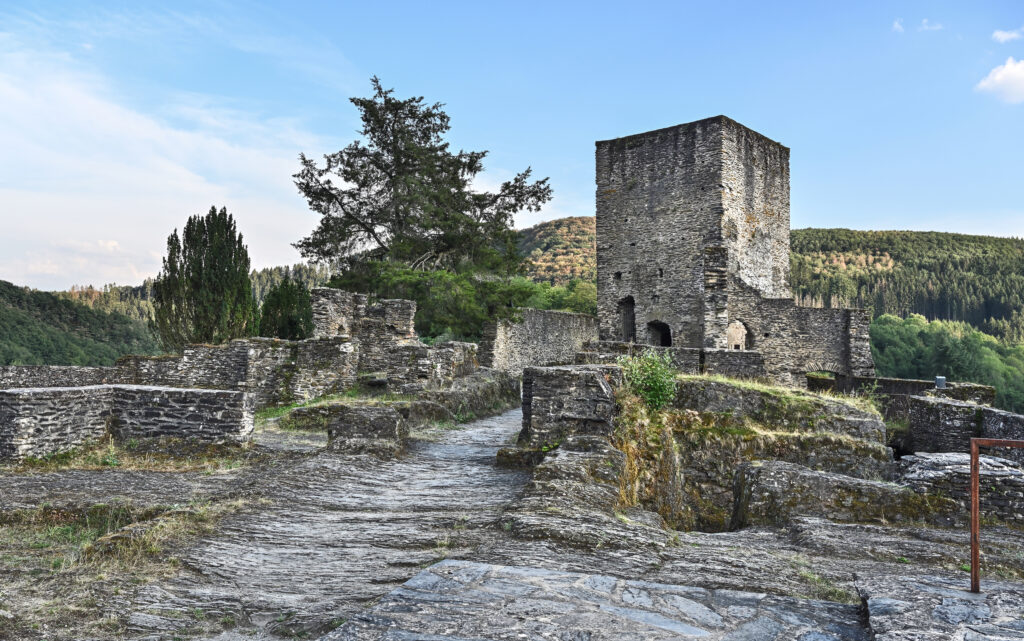
In the mid-19th century, local farmers managed parts of the bastion. Roofs were repaired with straw and alterations were made without much concern for historical integrity. The French writer Victor Hugo famously described this as “the revenge of the village on the rulers.” Despite these changes, the outer wall of the castle has remained largely intact, as many houses in the village incorporated it as their rear wall.
A strategic and scenic location
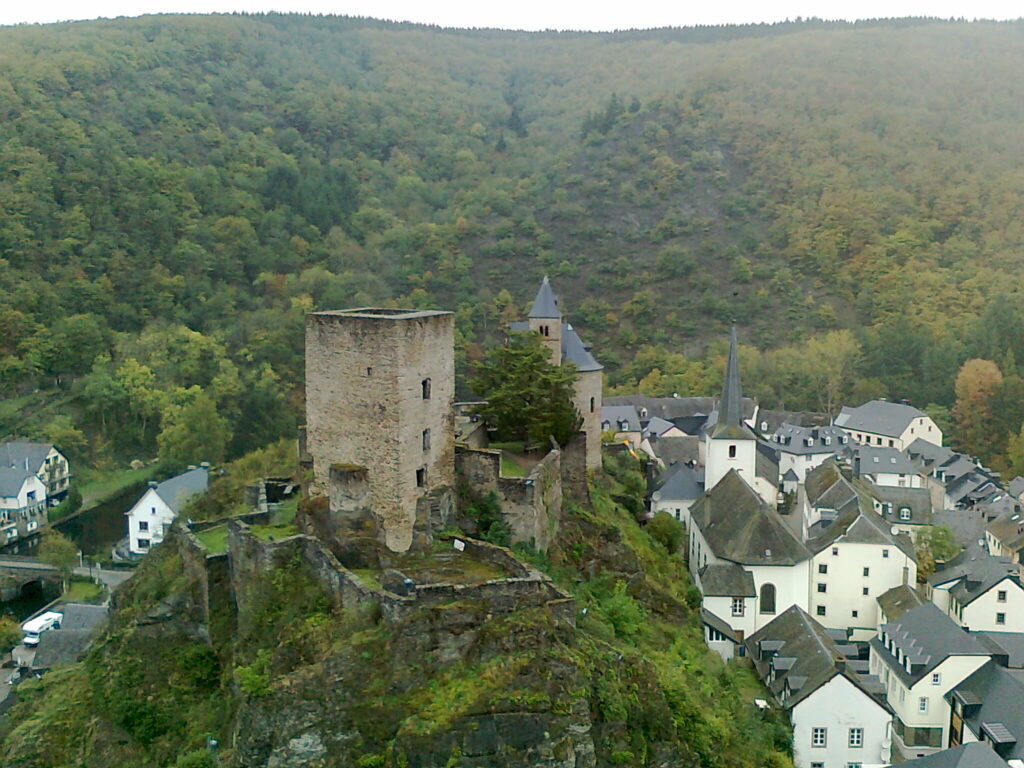
The castle stands on a rocky spur above Esch-sur-Sûre, naturally protected by a pronounced meander of the Sûre River, which surrounds it on three sides. The village itself offers a wide range of activities, including water sports, museums, camping and gastronomy, and has been named one of the 20 most beautiful villages in Europe by GEOplus.
Ownership through time
Ownership of the site changed several times throughout its history. In 927, Maingaud and his wife Hildtrude acquired the site. In the 14th century, the castle left the possession of the Maingaud family and was divided between the Brandenburg, Kronenburg and Falkenstein families. In 1902, the ruins were purchased from the state by Martin Riano d’Hutzt for 1,000 francs. Since 2005, the castle has once again been owned by the State.
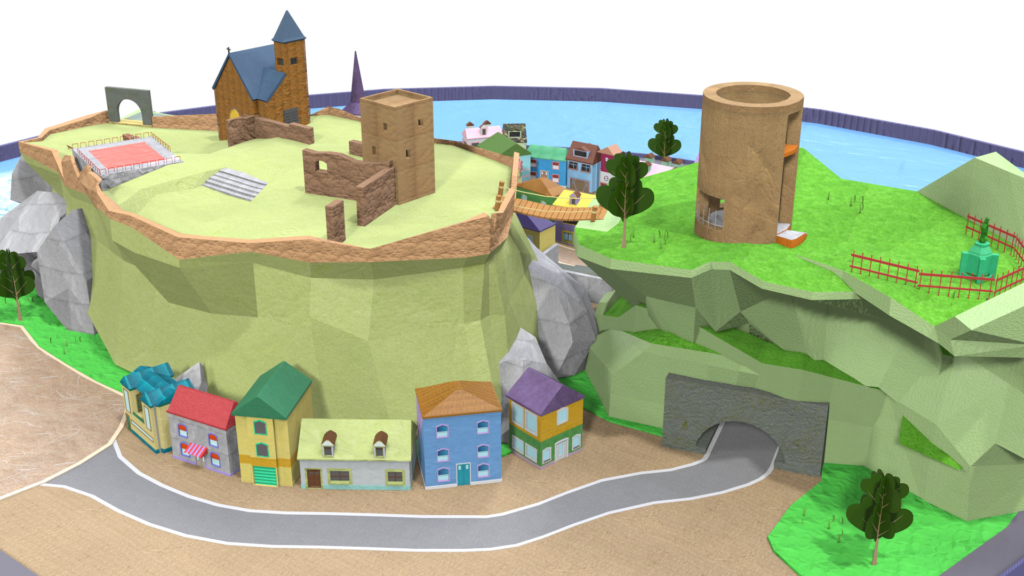
Today, Le Château d’Esch-sur-Sûre stands as a layered historical monument, shaped by centuries of construction, conflict, decline and restoration, closely tied to the village and landscape that surround it.