
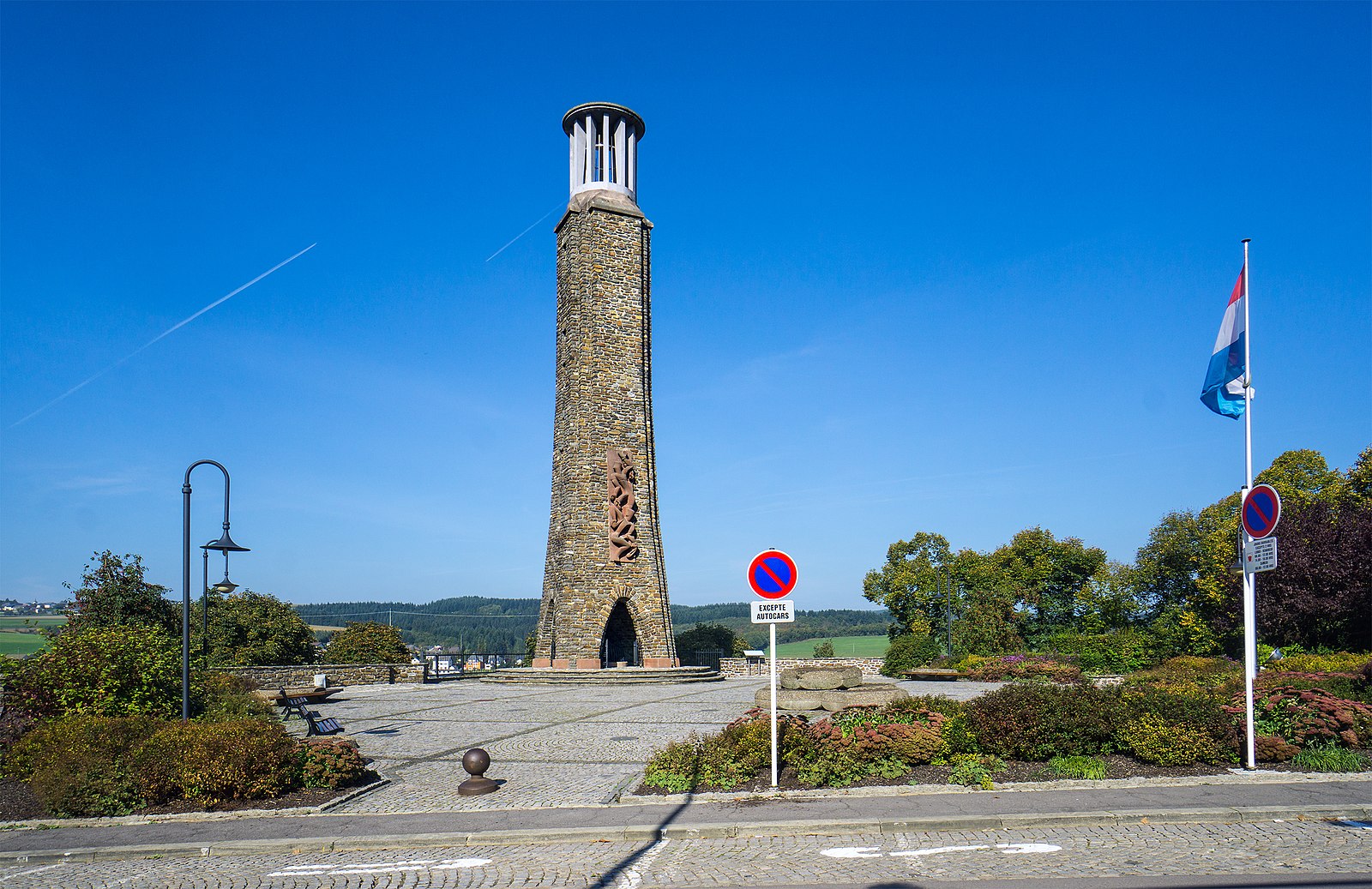
The Strike Monument in Wiltz is a powerful symbol of resistance and memory. Rising 23 metres high, the monument was designed to resemble a lighthouse and was built above a crypt. Visitors can climb to the top of the tower, where a panoramic view over the city of Wiltz reinforces the monument’s prominent position in the landscape.
The architect Roger Wercollier was commissioned to design the monument and drew up all the plans himself. On the side facing the street, a relief depicts the biblical battle of David against Goliath. On the opposite side, another relief shows Luxembourg strikers being arrested and collapsing under bullets, directly linking the monument’s form to the events it commemorates. Two additional bas-reliefs in the crypt were designed by Roger Wercollier’s brother, Lucien.
The national strike of 1942
The monument marks the national general strike that erupted in August 1942. Following the German occupation of Luxembourg, compulsory military service was introduced, triggering a widespread strike by the resistance. The movement quickly spread across the country, prompting a brutal response from the occupying forces.
In recognition of the victims of this strike, Minister Eugène Schaus initiated the creation of the memorial. It was officially inaugurated on 30 September 1956.
Each year, a memorial ceremony is held on August 31 to honor those who lost their lives during the strike.
Wiltz, a city of resistance
Wiltz is often referred to as the “Cité Martyr,” a title that reflects the selfless resistance of its inhabitants during the German occupation.
During the occupation, the city of Wiltz also endured heavy fighting in 1944, when Nazi forces attacked from multiple sides. Civilians suffered significant losses during this period. The American Third Army counterattacked in late December, reclaiming Wiltz and nearby towns as part of the broader operations to liberate Luxembourg during the Battle of the Bulge.
The Strike Monument stands as a lasting reminder of this history, combining architecture, art and remembrance to preserve the memory of one of Luxembourg’s most significant acts of resistance.