
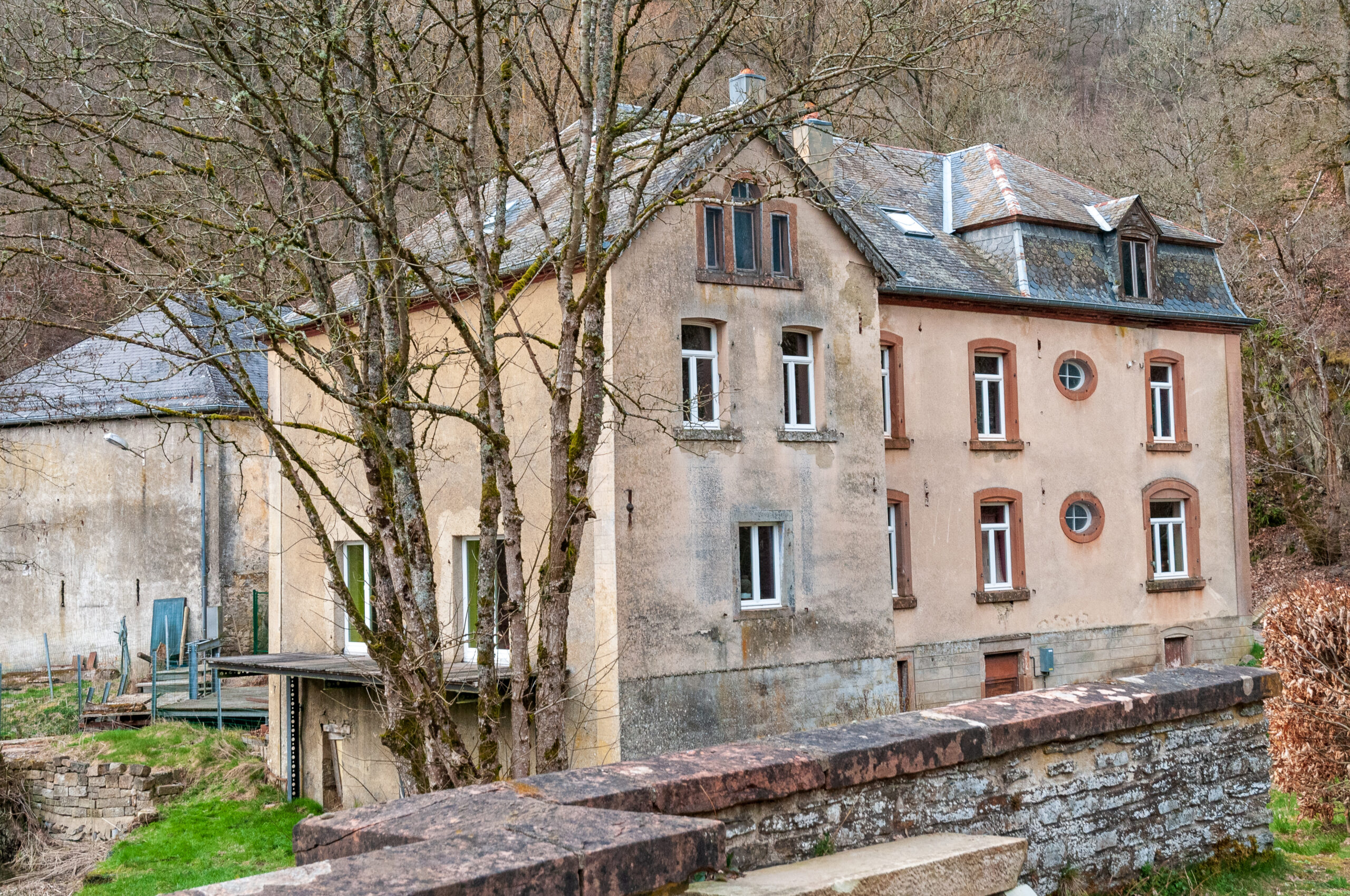
Surré (“Syr” in German and “Sir” in Luxembourgish) is a village in the commune of Boulaide, located less than two kilometers east of the Belgian border. Set in a flat valley, it is shaped by the Syrbach, a tributary of the Sûre River that rises north of the village. Two important landmarks define the settlement: the Church of Surré and the Sirer Millen.
The Mills of Boulaide
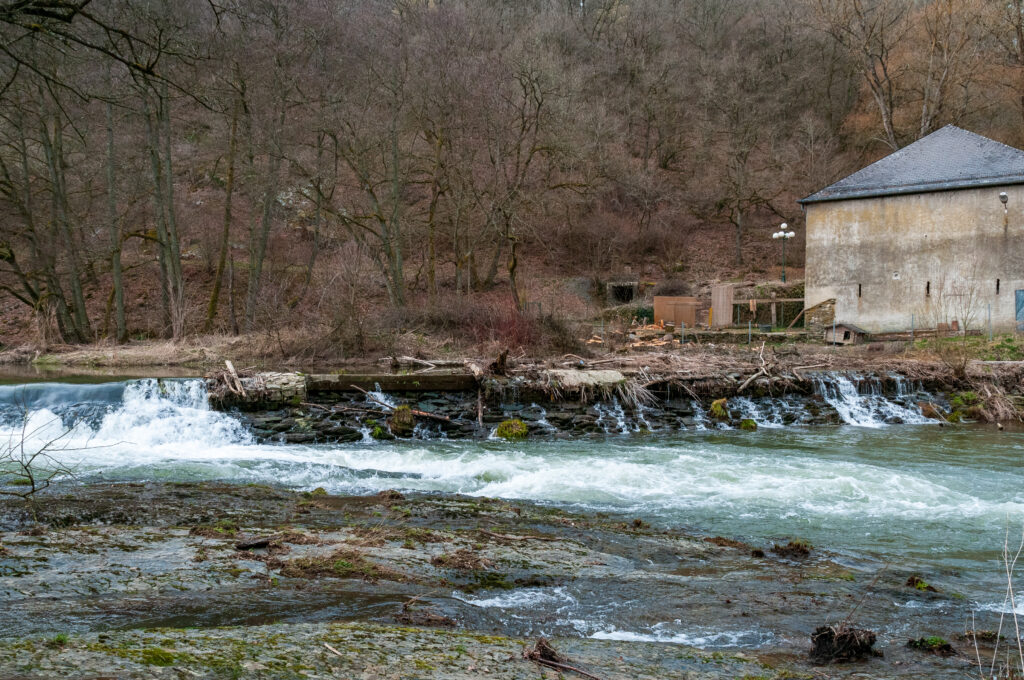
The history of Boulaide is closely tied to its mills, which supported agriculture and local industry for centuries. The Bauschelter Millen, first mentioned in 1317, stood near an important Roman road linking Aachen and Arlon. Over time, it served multiple functions, from flour production to fodder processing. In 1905, it was purchased by Pierre Schmitz, and after major reconstruction in the early 1920s, it featured a large waterwheel and later generated electricity. Flour production continued until 1950, followed by other agricultural uses until 1963.
The Sirer Millen, located in Surré, was built between 1460 and 1473 and passed through many owners over the centuries. It produced flour and other products until 1954. In 1962, its waterwheel was replaced by a turbine adapted to local water conditions, allowing continued operation with more modern technology. Today, the mill and its water channel are protected as national monuments, offering educational insight into traditional milling practices.
Another historic site, the Schaus Millen, now in ruins, also forms part of this milling heritage. Like other watermills in the region, it reflects the technologies and rural lifestyles that once shaped everyday life in Boulaide.
Everyday Life and Agriculture
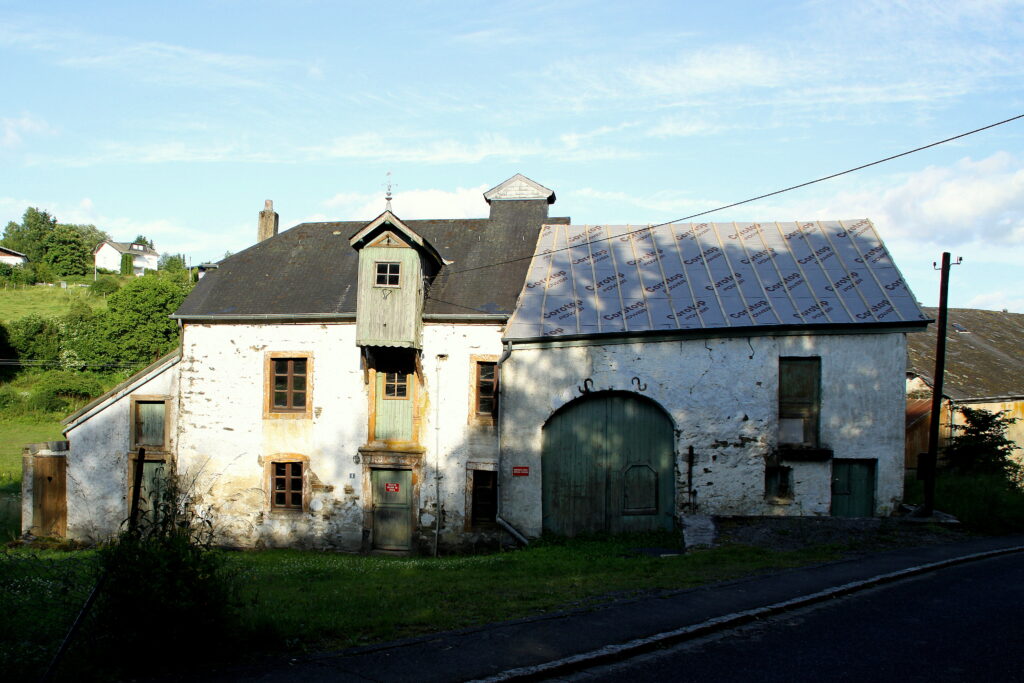
Agriculture has long been central to life in Surré. In 1899, potato production was so abundant that farmers lacked enough cellar space to store the harvest. Local history is rich with personal stories, such as a wedding in 1812 where the bride, Catherine Thilmany, received livestock, tools, and household goods as a dowry. In recent years, modern infrastructure has left its mark, including the installation of a stainless-steel water tank in 2009, which posed a major logistical challenge due to the village’s narrow streets.
Notable Figures
Monsignor Falize is a notable figure connected to Surré. As a priest, he inaugurated the statue of the Sacred Heart and contributed to both spiritual and communal life. He later became a member of parliament, founded the Sankt-Paulus-Verlag in 1850, and eventually became the first bishop of Norway. The Falize family also managed a tannery in nearby Betlange, which employed up to 200 people at its peak.
Art, Mobility, and Village Life
Cultural life is visible around the church, where sculptures by local artist Nuno Mafra can be seen. His works appear throughout the Éislek region, including the tree sculpture in Boulaide’s center. The Heienhaff in Surré, recognized as a national monument, is part of the “Maison des Artistes” project, providing studio space for artists.
The village is connected to its surroundings through the Promenade de la Betlange, an 8.5 km cycling route that crosses into Belgium and offers scenic views. Municipal projects aim to improve housing, create jobs, and increase the overall attractiveness of Surré.
Surré’s history and landscape offer a window into centuries of rural life, from its thriving mills to agricultural traditions and local craftsmanship.
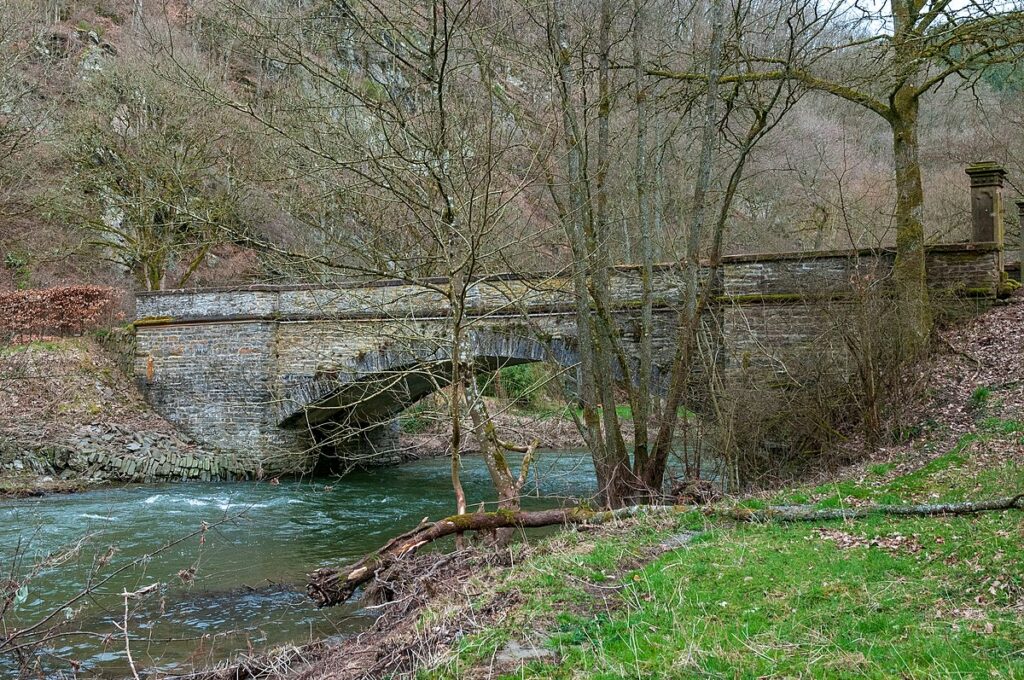
Today, the village continues to preserve this heritage while connecting residents and visitors to its natural and cultural surroundings.