
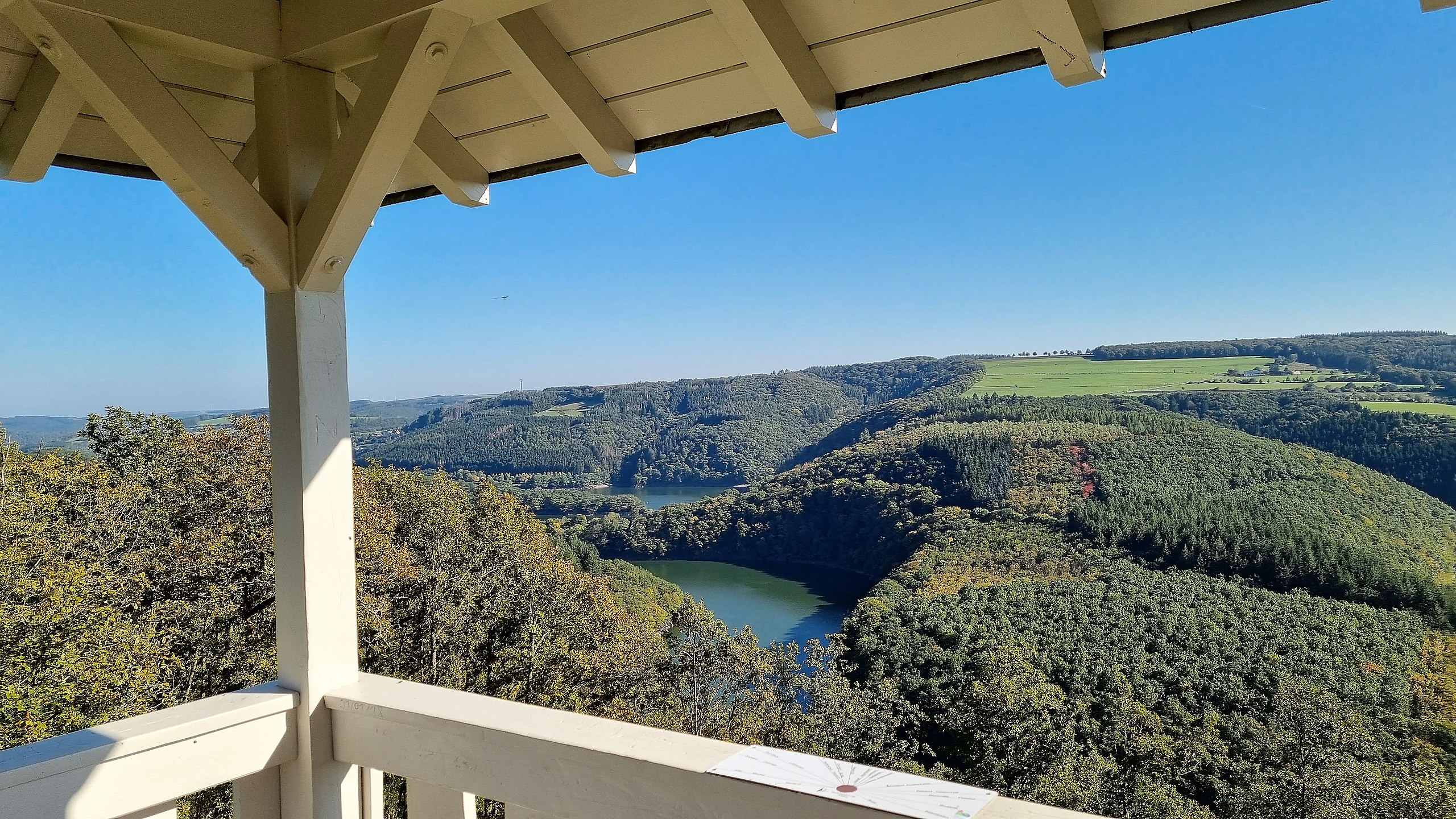
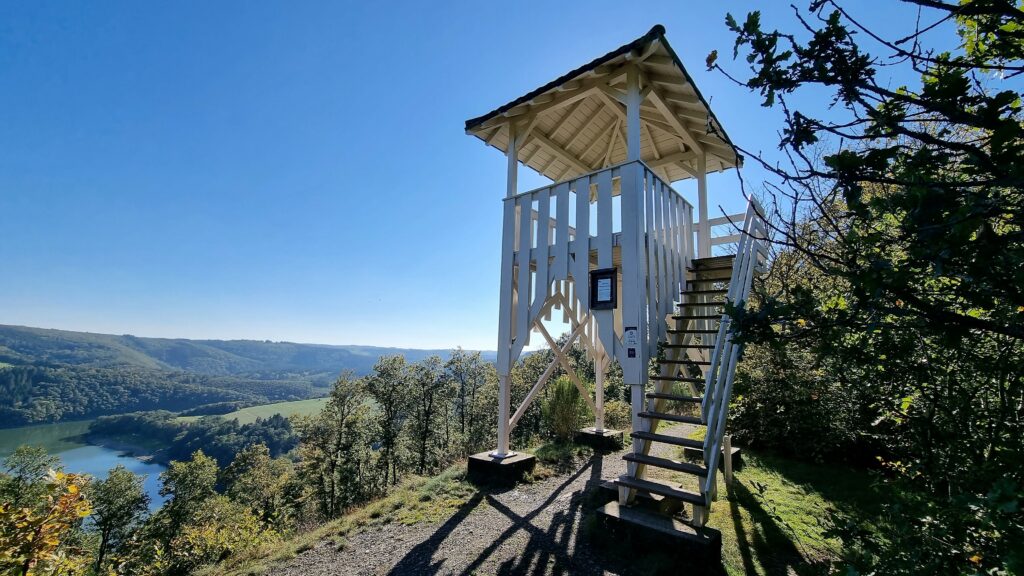
Tempelskamp is a vantage point designed for rest and observation. Rising six metres above the ground, it offers panoramic views over the Sûre, the Lac de la Haute-Sûre and the surrounding hills. Also known as the Mirador Tempelskamp, the site invites visitors to stop, sit and take in the landscape, with picnic tables and benches available nearby.
The viewpoint can be reached via a short and easily signposted walk, making it a popular stop for nature lovers and outdoor enthusiasts. It forms part of several hiking routes in and around Boulaide, including the Autopédestre Baschleiden, Circuit du Lac, Sentier de la Haute-Sûre, Sentier Ardennes-Eifel and the European long-distance trail E3. Tempelskamp was built as part of the LEADER project, under the supervision of Fred Engel, and has also served as a cultural backdrop, featuring in the video clip for Serge Tonnar’s song “Kiermes a mengem Duerf”.
Reconnecting the landscape
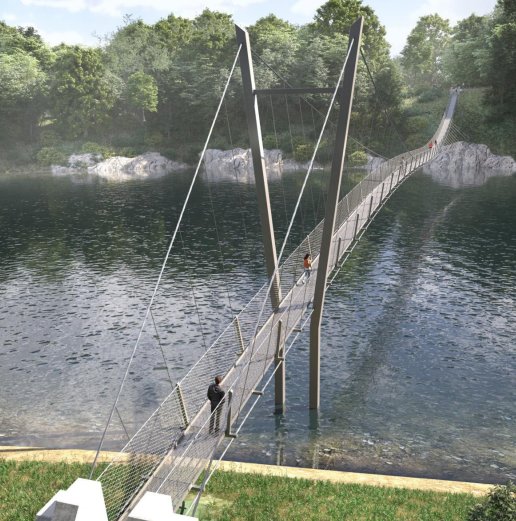
The creation of the Upper Sûre Lake in the 1950s physically split the northwest region of Luxembourg. The planned suspension bridge, known as the Passerelle du Burfelt, responds directly to this division. Designed for pedestrians and cyclists, the bridge will cross the lake at a height of up to five metres above the water.
Boulaide and Esch-sur-Sûre are the two municipalities expected to benefit most from the project. After studying three possible locations, the site behind the Burfelt farm was selected due to its favourable characteristics and minimal environmental impact. Beyond the crossing itself, the project also includes measures to improve local traffic conditions, such as a new park-and-ride facility and temporary parking areas.
Design, access and environmental care
The chosen design for the bridge is a composite arch and cable structure, measuring 150 metres in length and 1.5 metres in width. This solution was selected for its balance between structural reliability, environmental impact and cost-effectiveness. Hot-dip galvanized steel was chosen for its durability and low maintenance requirements.
Extensive studies were carried out to ensure compliance with Natura 2000 conservation objectives, with specific measures planned to minimise and compensate for environmental disturbance. Accessibility was also a key consideration. Although the natural slope of the terrain presented challenges, provisions were made for people with reduced mobility, including the renovation of a 1.4-kilometre forest path to improve access and safety.
The area around Boulaide is defined by wide views, water and forested hills, shaped over time by both natural features and human intervention. Viewpoints, paths and new infrastructure reflect ongoing efforts to make this landscape accessible while respecting its character.